

I Accuse
Description
If the original I Accuse (J’Accuse, 1919) was a silent cry of the soul, a reaction to the First World War, then the remake became a warning that no one heard. Soon after, the Second World War began, in which new inventions and technologies were used for mass killing.
In many ways the remake turned out to be prophetic, and almost a hundred years later its story is more relevant than ever. And new technologies are still being used for the mass suppression and killing of people.
What to watch — the original or the remake? Watch both!
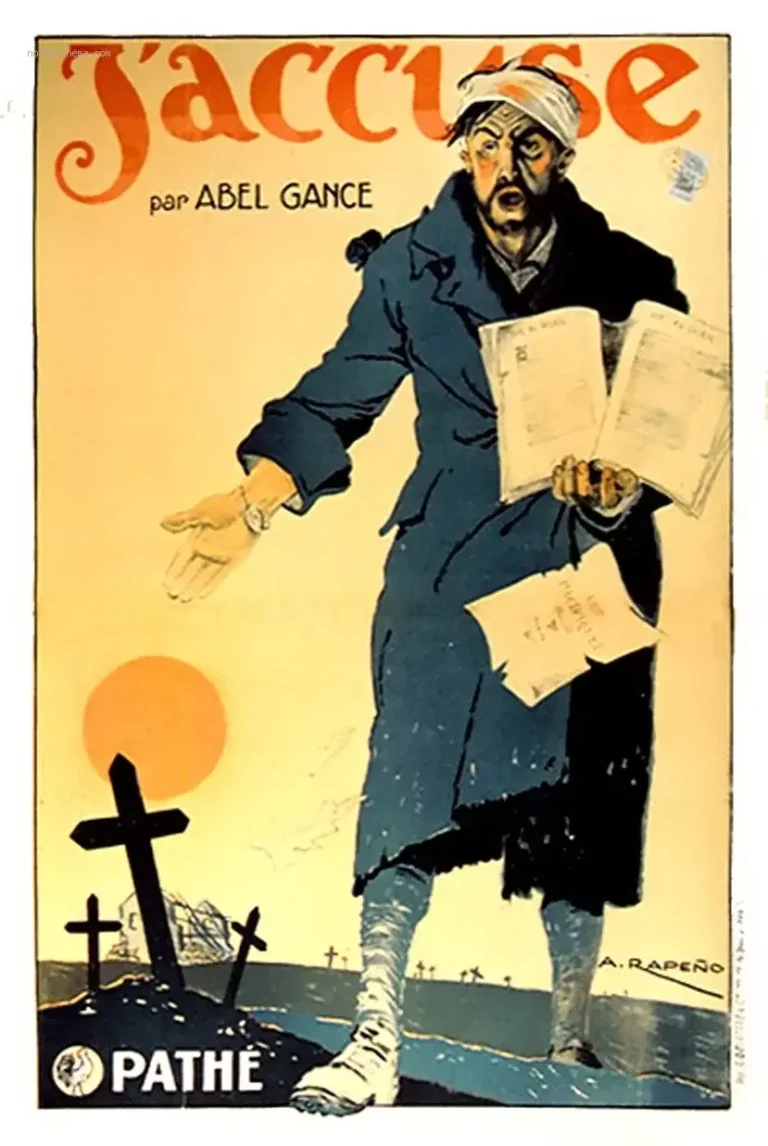
J’Accuse (1919). The hero of the film is a poet and a soldier, driven mad by the horrors of war. It is a silent film with revolutionary editing for its time, running about two and a half hours. It is slow and contemplative. Grief, shock, an attempt to make sense of the slaughter that had just ended.
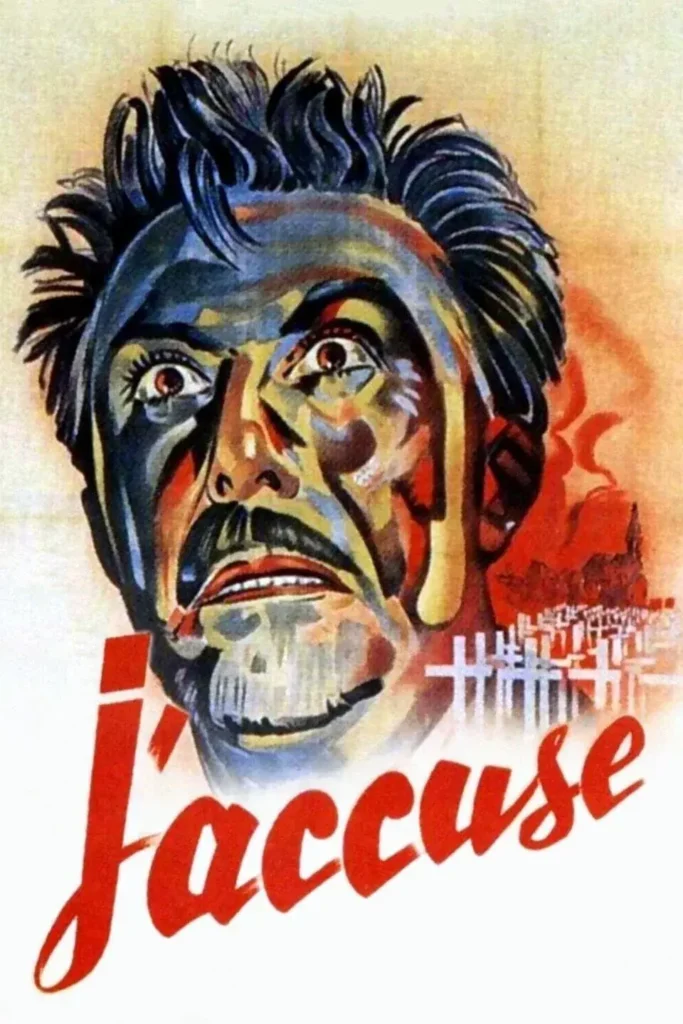
I Accuse (J’Accuse, 1938). The hero of the film is an inventor who wants to put an end to war. A sound film, an hour and a half long, more modern and more dynamic in its plot. It is a desperate warning from a director who had already been through all of this twenty years earlier. He sees that society has learned nothing and that the world is once again heading for the meat grinder.
Abel Gance, the director of the original J’Accuse and of its remake, remained unheard — just as Charlie Chaplin remained unheard with his anti-war speech at the end of The Great Dictator.
I hope that we will all live to see the moment (if by then we haven’t destroyed the planet and still have somewhere to live) when slogans like “We can repeat it” are replaced by “Never again”.